Scratch
A platform for deploying and browsing experimental web apps. Each web app is a collection of static files and an optional backing API implemented in Python.
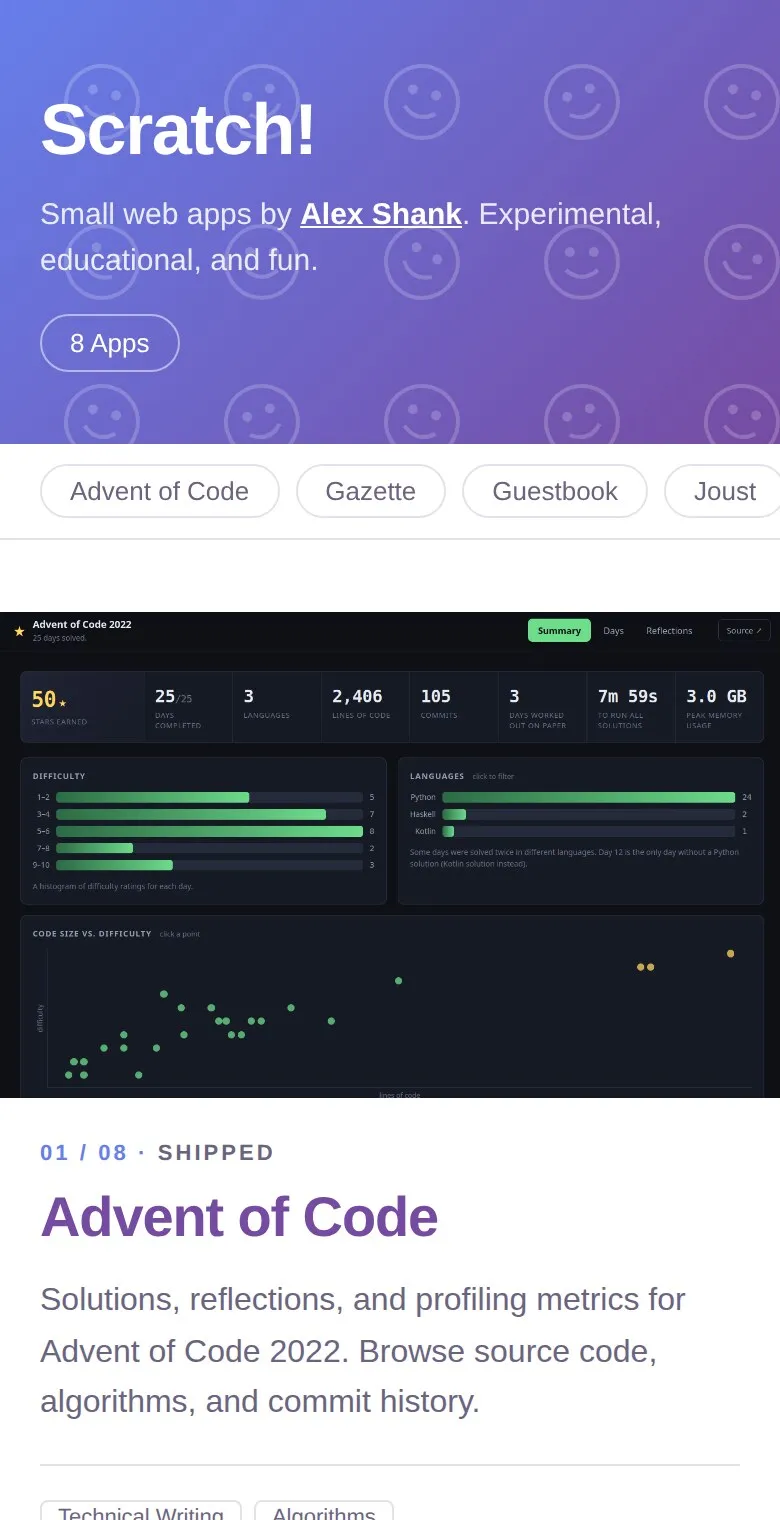
A Home for Small Web Experiments
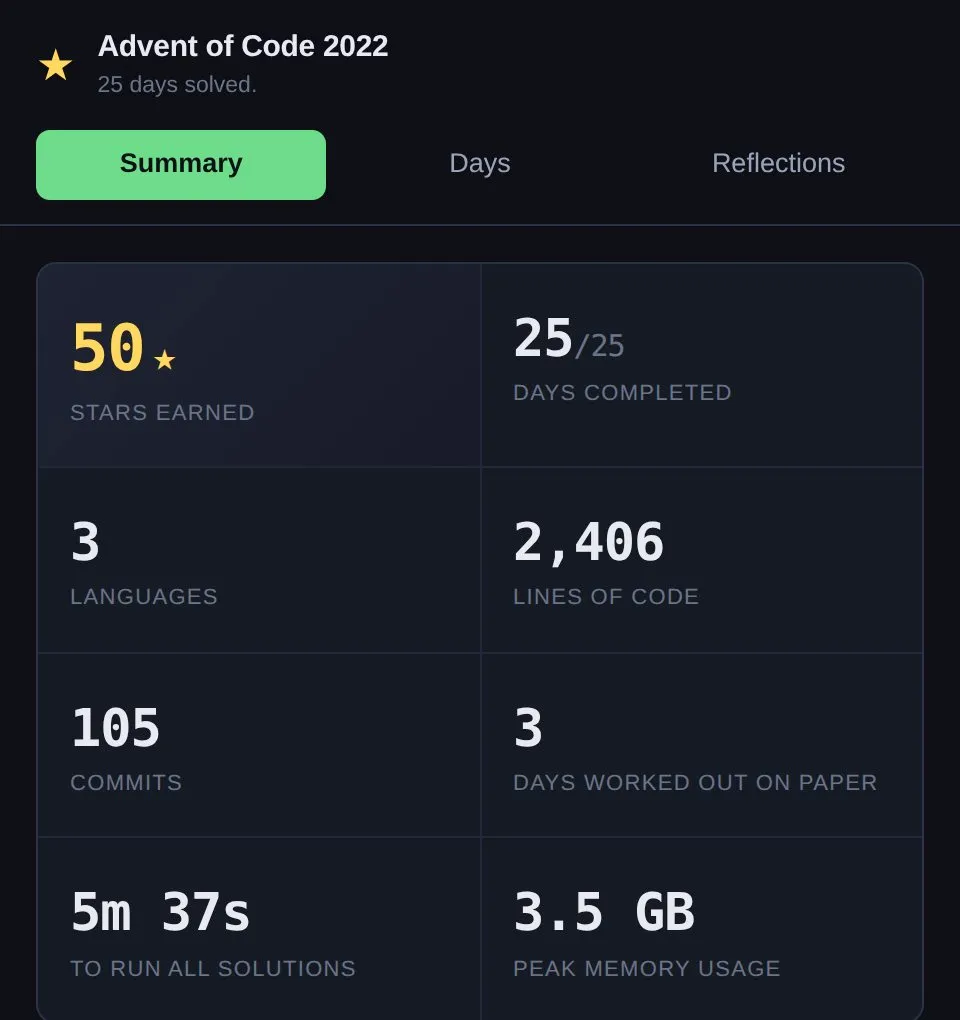
A Retrospective on Advent of Code 2022
Solutions and reflections for all 25 days, solved over 21 months. Filter days by technique, read each solution, and compare runtime and memory usage.
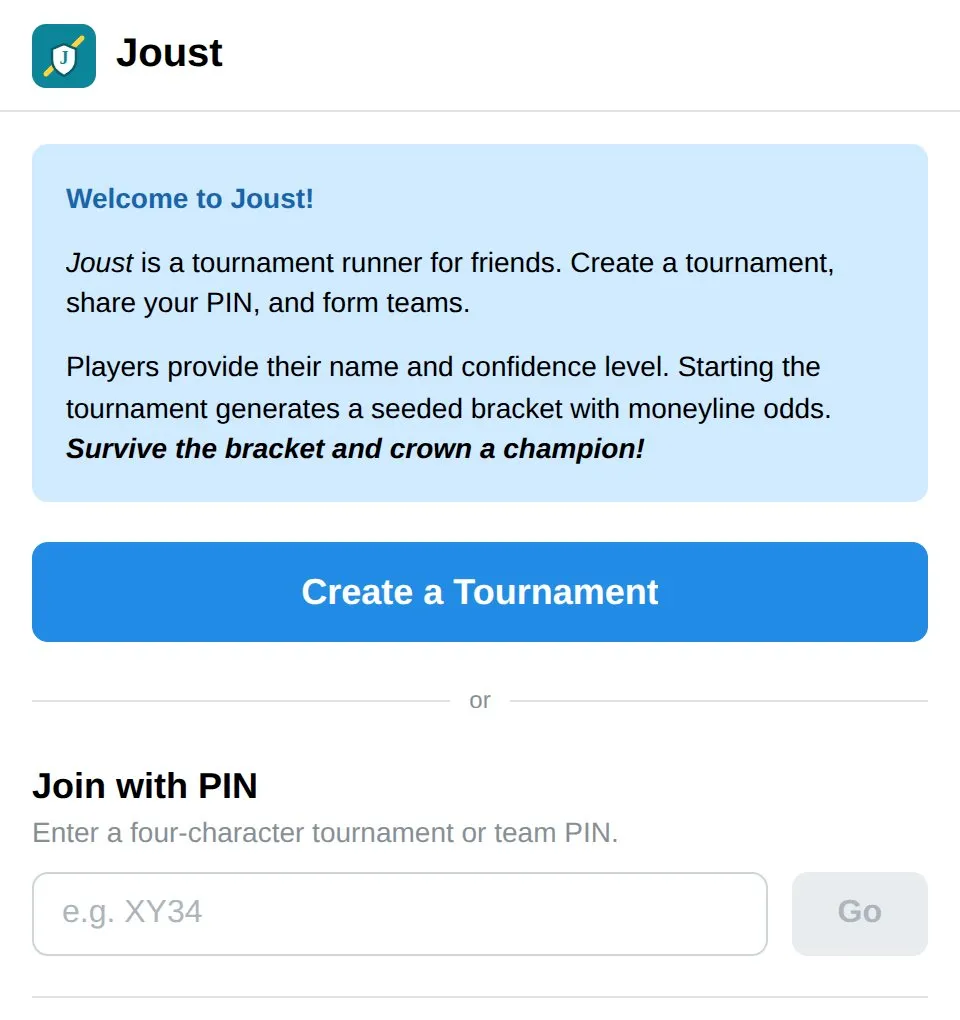
A Tournament Bracket on Your Phone
Joust runs tournaments for friends. Create a tournament, share a four-character PIN, and join a team. The app seeds a bracket with moneyline odds based on player confidence.

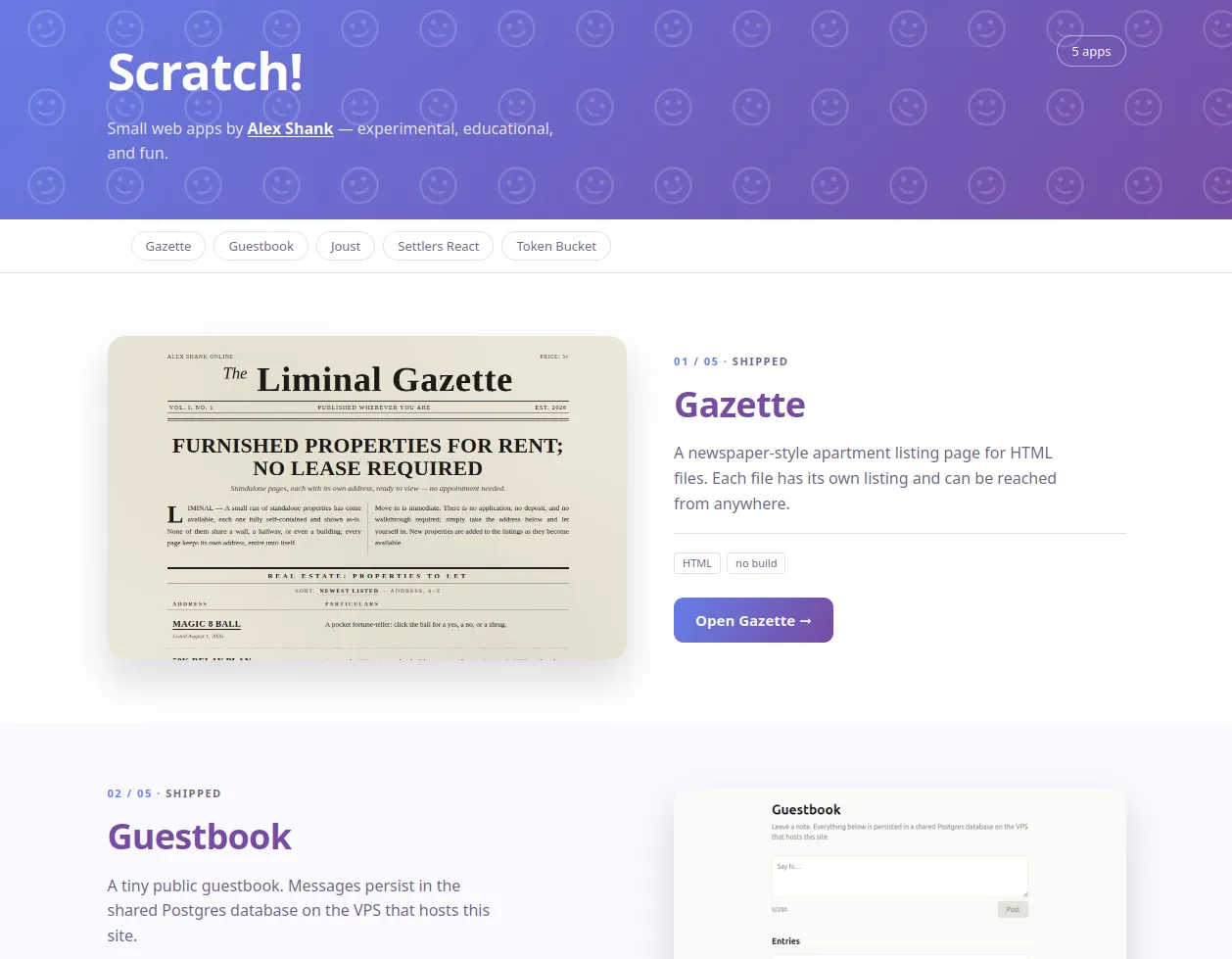
Static Pages with No Build Step
The Liminal Gazette lists standalone HTML pages like newspaper classifieds. Publishing means dropping an HTML file into a folder and adding a row to the index.
At a Glance
From Laptop to Live Container
- RsyncSource to the VPS
- MigrationsBackup, then Flyway
- Podman BuildNode stages, then Python
- Container SwapProxy and Postgres stay up
- NGINXHTTPS to Gunicorn
Built with
Key takeawayOne shared Python backend pays off with more experiments. A single set of dependencies, linting rules, and type checks covers every API. Each new app slots in the same way.
Build Notes
Challenges, learnings, and what's next
Challenges
- Flask does not automatically handle SPA client-side routing. A catch-all route checks whether the requested path maps to a real file on disk and falls back to
index.htmlif not. - Now that there are stateful applications on the VPS, Flyway migrations and more complex deployments are needed to avoid data loss or corruption.
- Some frontends must be built before deployment. This requires more complex container image build logic.
Learnings
- Stateful experiments use a shared Postgres instance on the VPS, but complexity is limited by giving each app its own database and scoped credentials.
- Database load can be limited via NGINX. Guestbook posts are capped per IP at the proxy, before they reach the Flask container.
- One shared Python backend pays off with more experiments. A single set of dependencies, linting rules, and type checks covers every API. Each new app slots in the same way.
Next
- Automate the React build and copy step, so
settlers-react/dist/no longer has to be copied in by hand after each change. - Introduce Redis or another caching system as app traffic increases.
Blog post
Scratch
A single Flask app that hosts a growing collection of small, self-contained web experiments.
Read the full story →More Apps
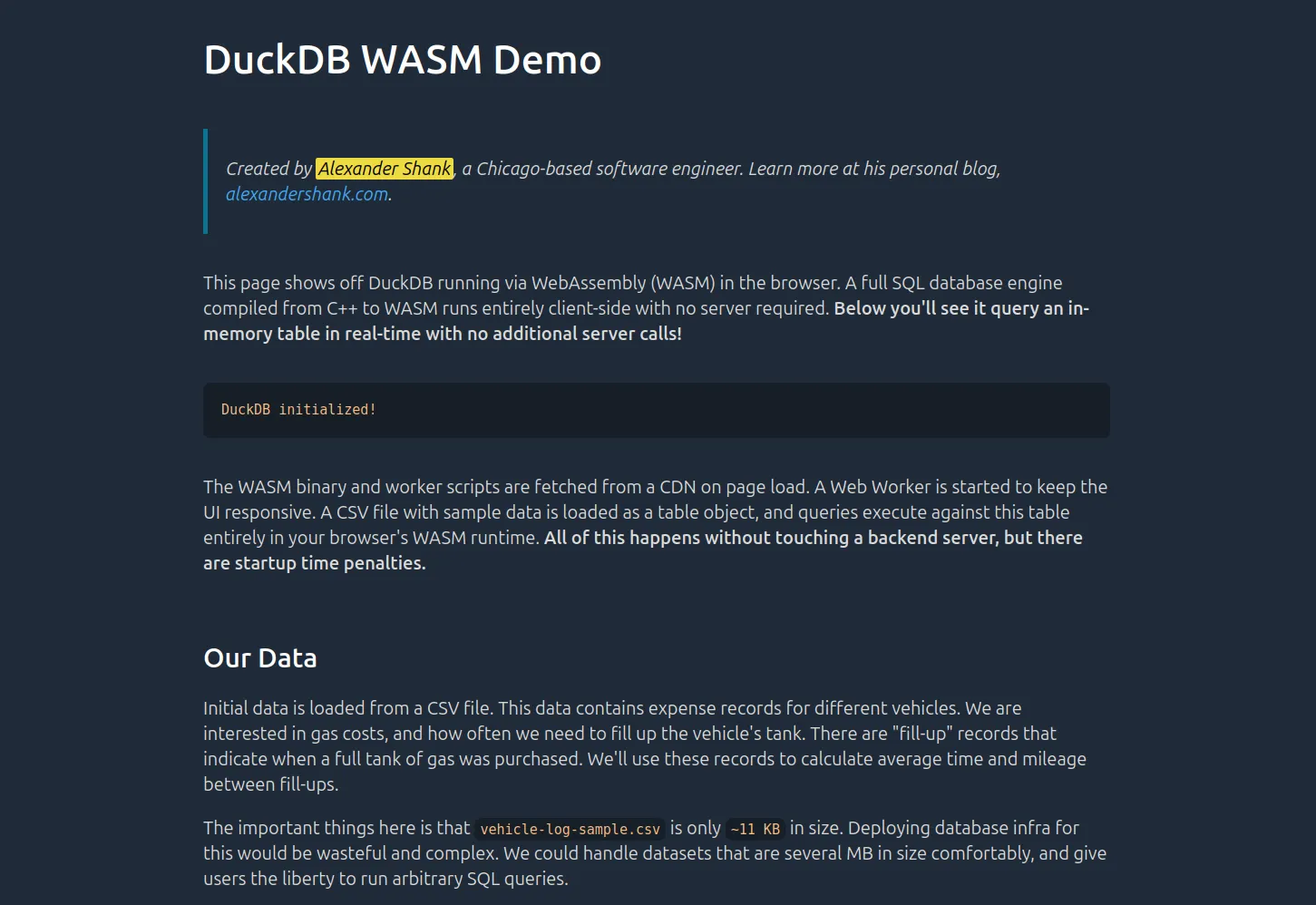
DuckDB WASM Demo
A full SQL database running inside your browser tab. Walk through a small analysis, then write your own queries.
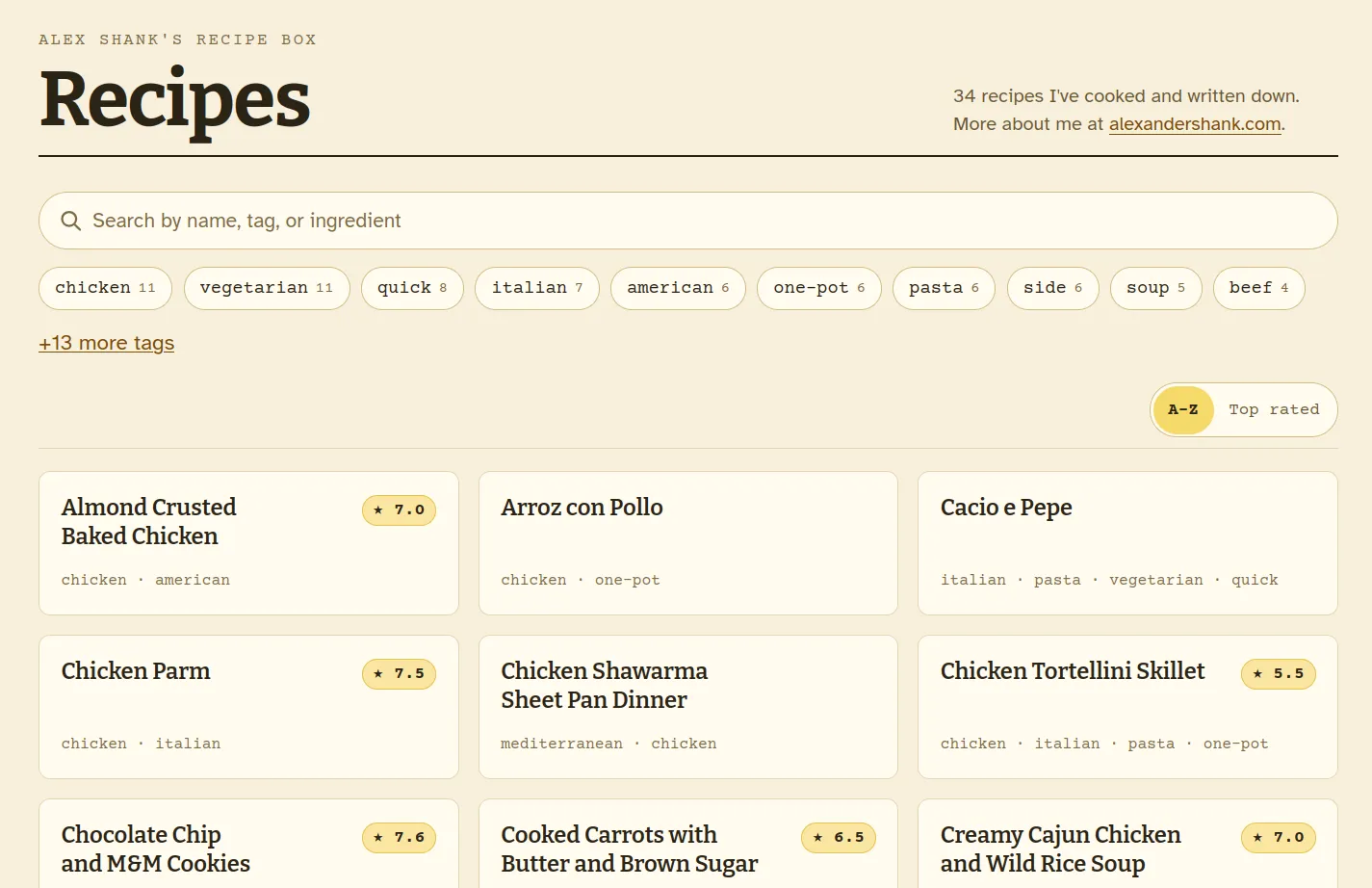
Cooking Recipes
Recipes without the ads, life stories, or popups. Built for cooking from a phone.
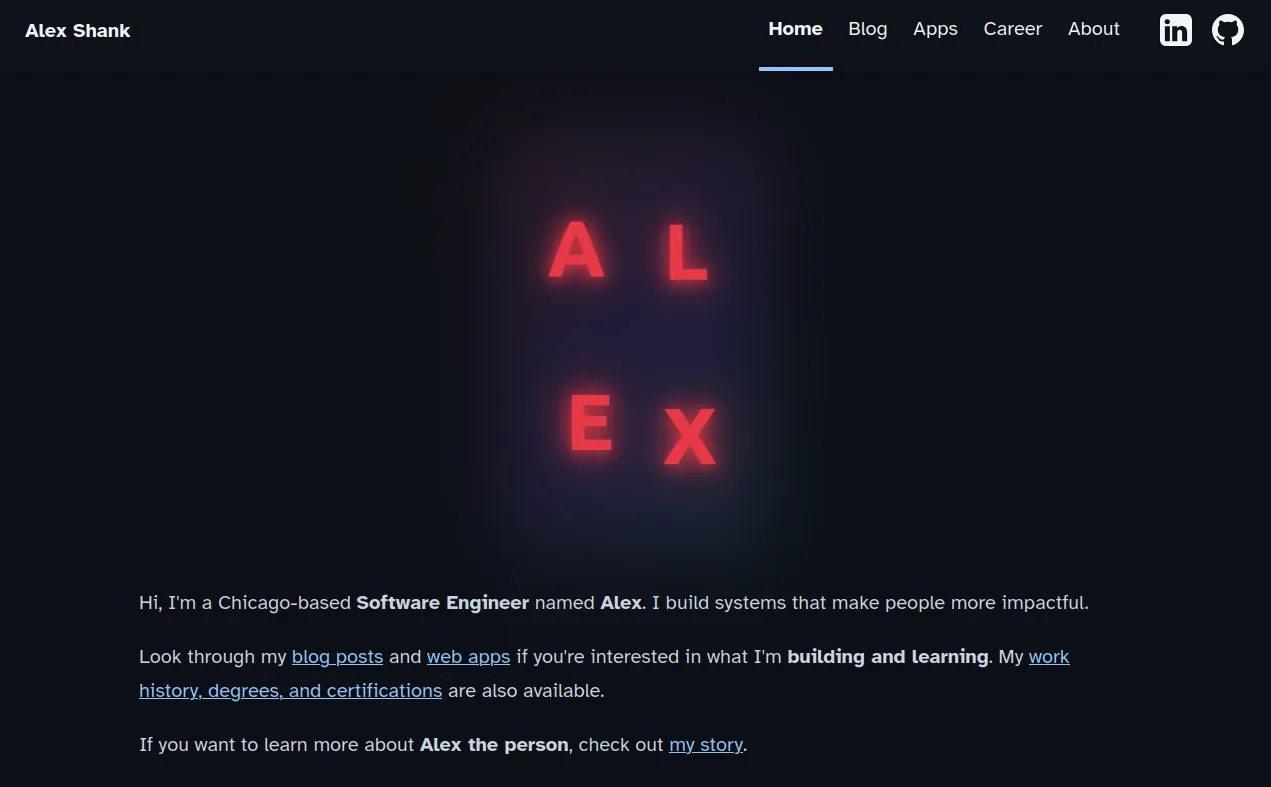
This Website
My developer portfolio and blog. Built with the Astro framework and deployed to a self-managed Hetzner VPS. The entry point to all my web content.