This Website
My developer portfolio and blog. Built with the Astro framework and deployed to a self-managed Hetzner VPS. The entry point to all my web content.
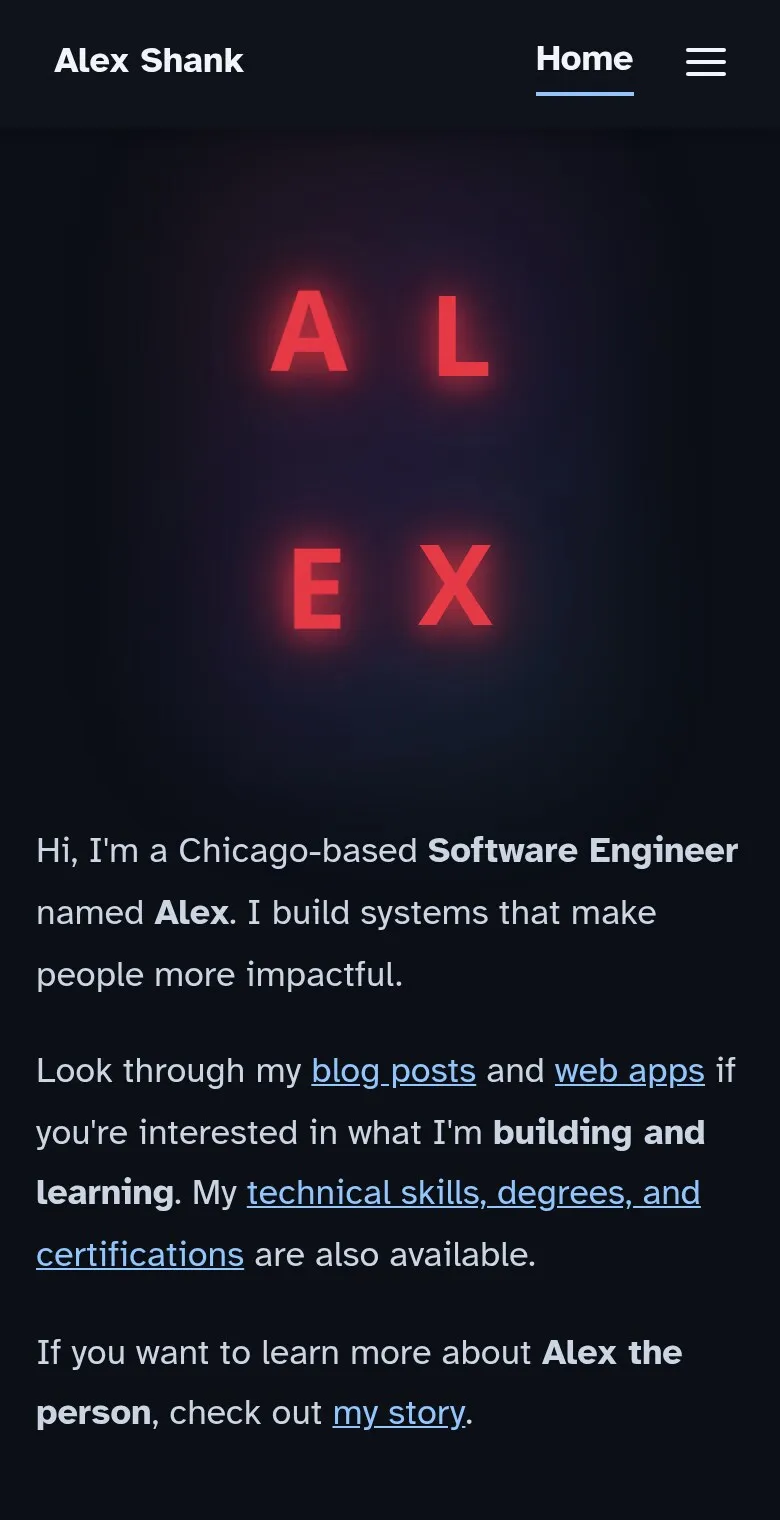
What the Site Does
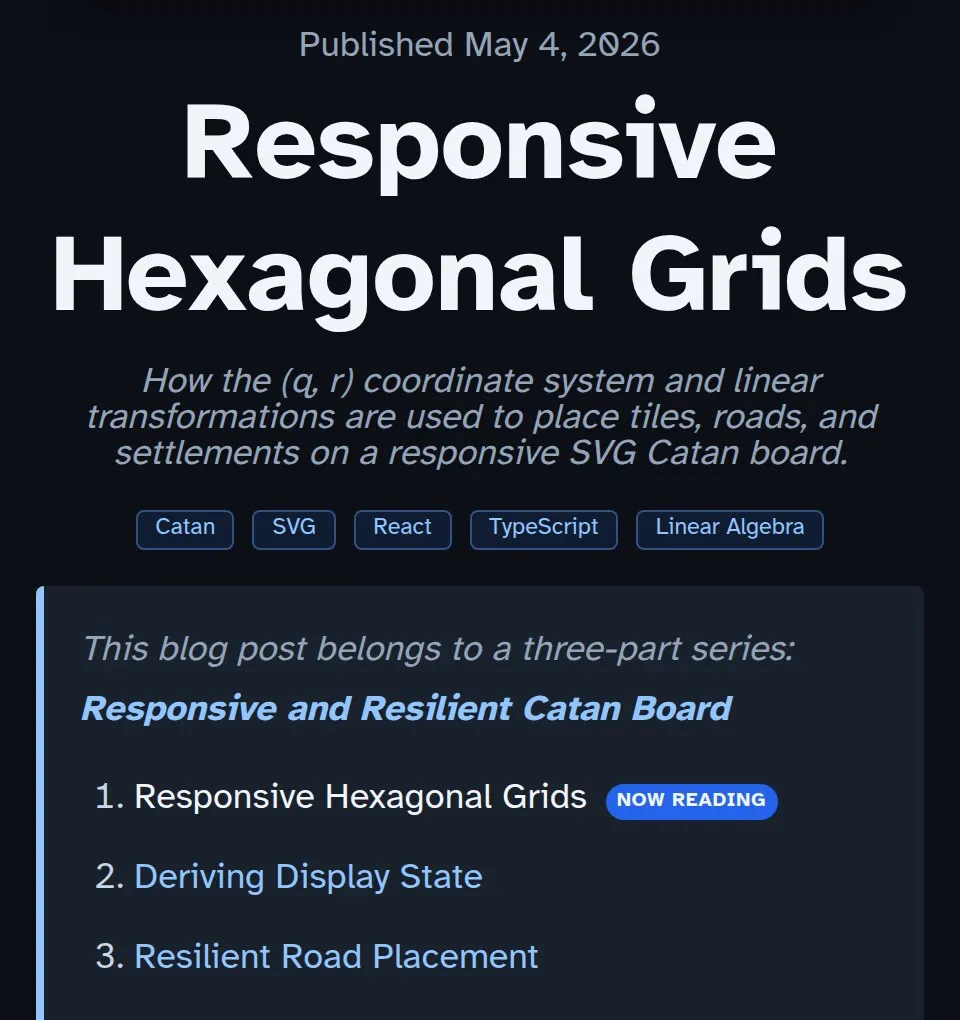
Posts That Come in Series
Longer topics are split into series. Each post shows where it sits, and the build fails if a published series skips a part.
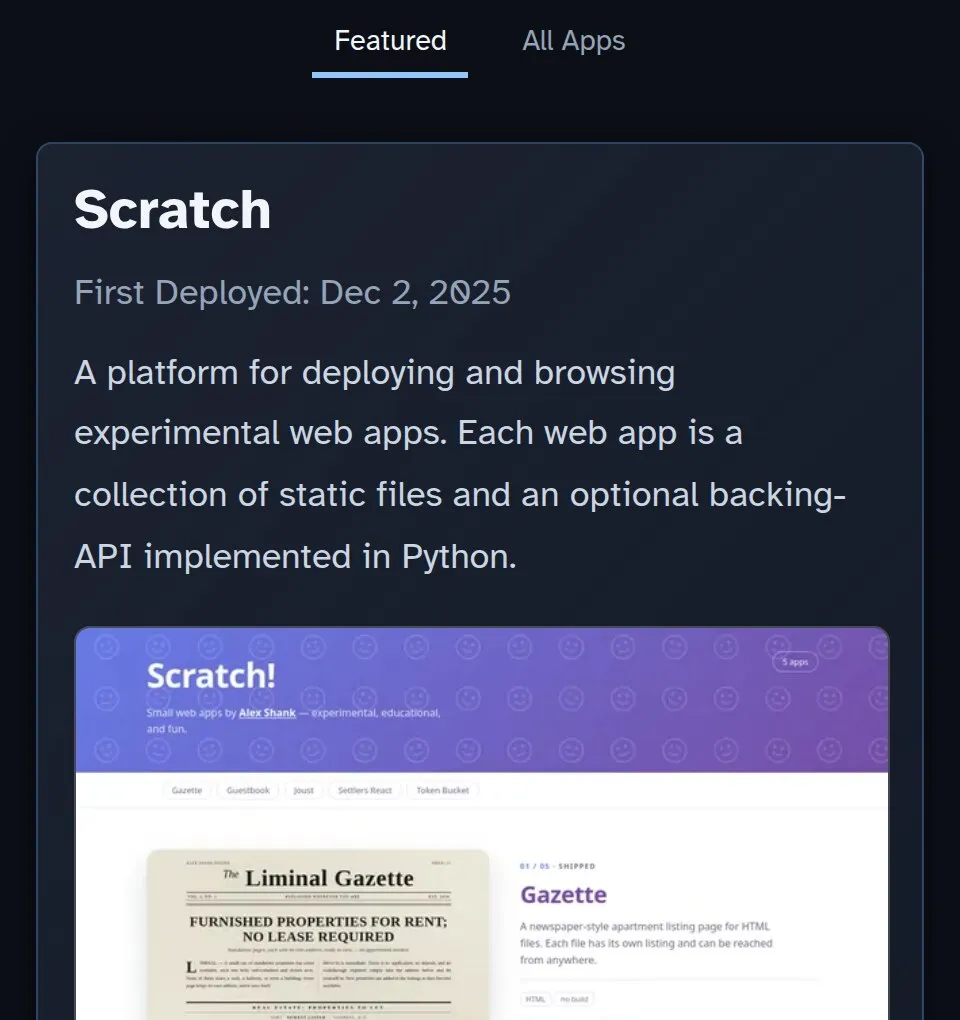
Every App in One Place
Each app gets a card with a screenshot, a link to the live site, and a link to its blog post when one is published.
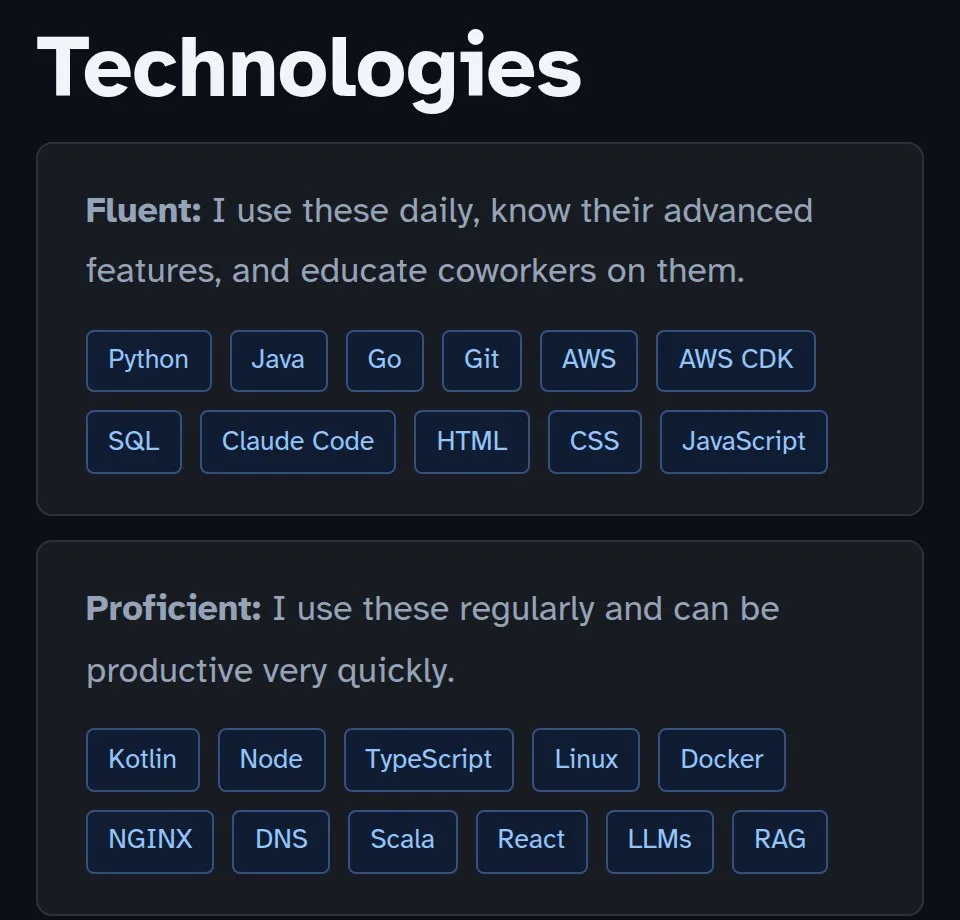
Skills Grouped by Fluency
Technologies are grouped by how well I know them, from tools I use daily to ones I'm still exploring.
At a Glance
From Markdown to alexandershank.com
- Markdown and MDXValidate Content Collections
- Astro BuildStatic HTML, Optimized Images
- rsyncCopy to VPS
- NGINXPodman, Let's Encrypt
Built with
Key takeawayYou don't need a complex cloud environment to serve quality content and feature-rich web apps.
Build Notes
Challenges, learnings, and what's next
Challenges
- Each new subdomain requires expanding the Let's Encrypt certificate with all existing domains explicitly listed. There is no true wildcard cert with the HTTP-01 (webroot) challenge.
- Early deploys used
rsyncto replacenginx.conf, which gave the file a new inode. The NGINX container's bind mount kept reading the old file until a full restart. Deploys now write through the existing inode, so a plain reload picks up the change.
Learnings
- Astro's content collections, schema validation, and draft system make it straightforward to manage the blog content lifecycle without a CMS.
- A systemd timer is a clean, reliable alternative to cron for recurring tasks like certificate renewal.
- Self-hosting analytics took one container, a Postgres database, and an NGINX proxy block.
- Many simple bots do not run JavaScript, so JavaScript analytics filters out a portion of bot traffic.
- One Postgres instance serves Umami and two Scratch apps, each with its own role and database.
Next
- Set up a CI/CD pipeline to automate builds and deployments instead of running deployment scripts from my local machine.
- Explore the DNS-01 Let's Encrypt challenge to get a true wildcard certificate, eliminating the need to explicitly expand the cert for each new subdomain.
- Explore high availability setups, if I ever need them.
More Apps
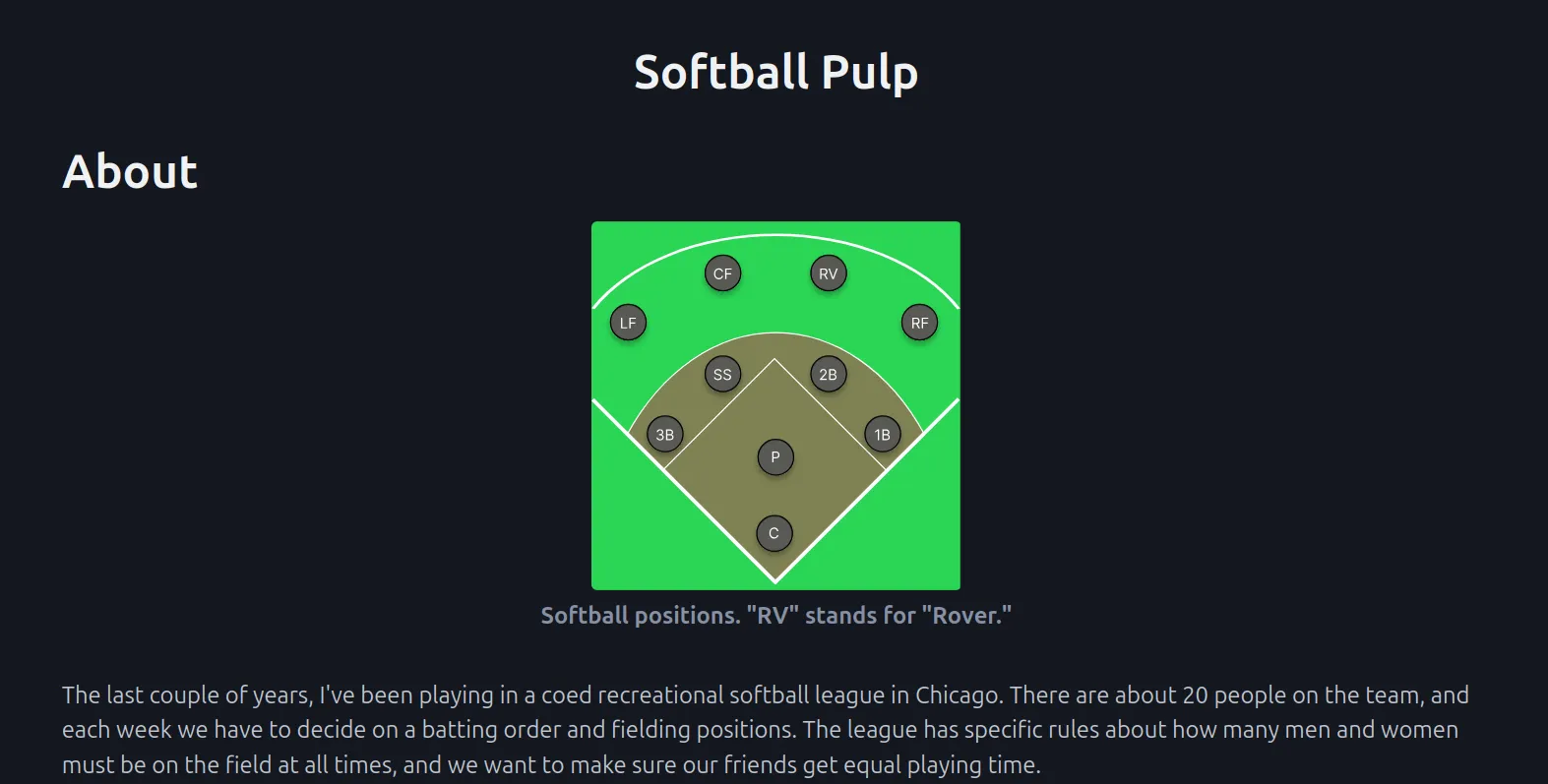
Softball Pulp
Auto-generate a winning softball lineup using linear programming and PuLP.
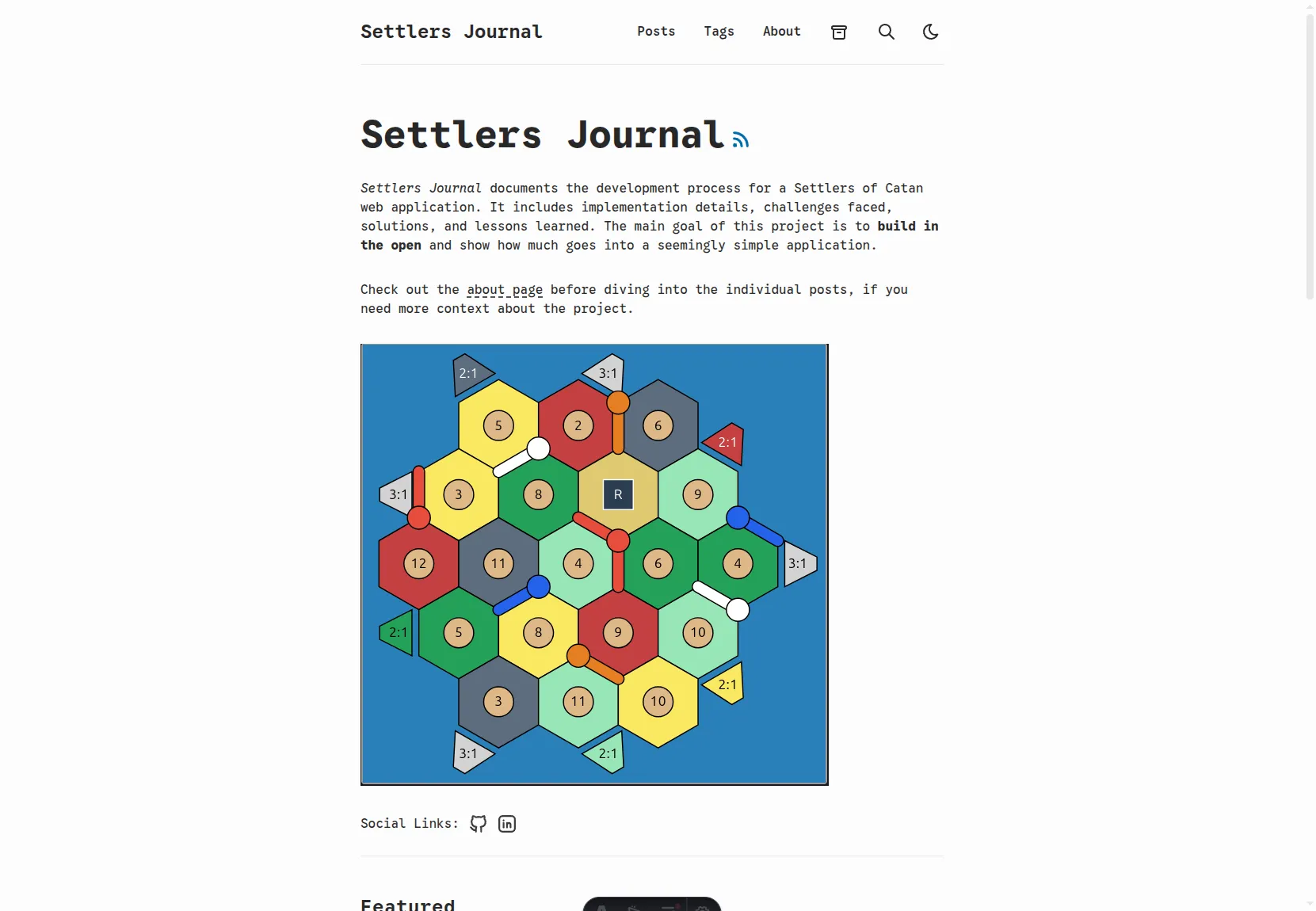
Settlers Journal
A development journal for a Settlers of Catan web application, published as a searchable static site with Astro and Pagefind.
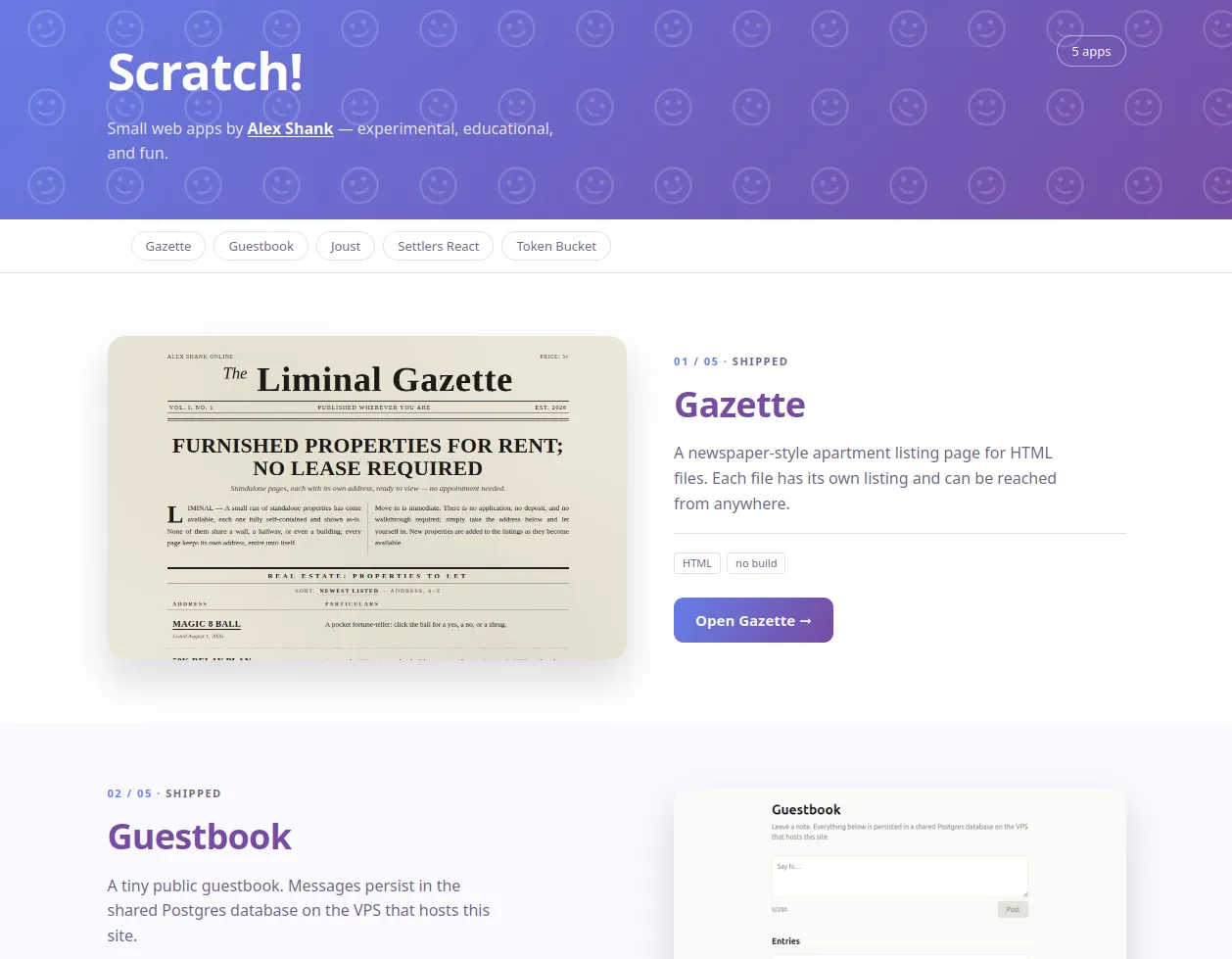
Scratch
A platform for deploying and browsing experimental web apps. Each web app is a collection of static files and an optional backing API implemented in Python.